Saturday, 25 April 2026 – Geneva
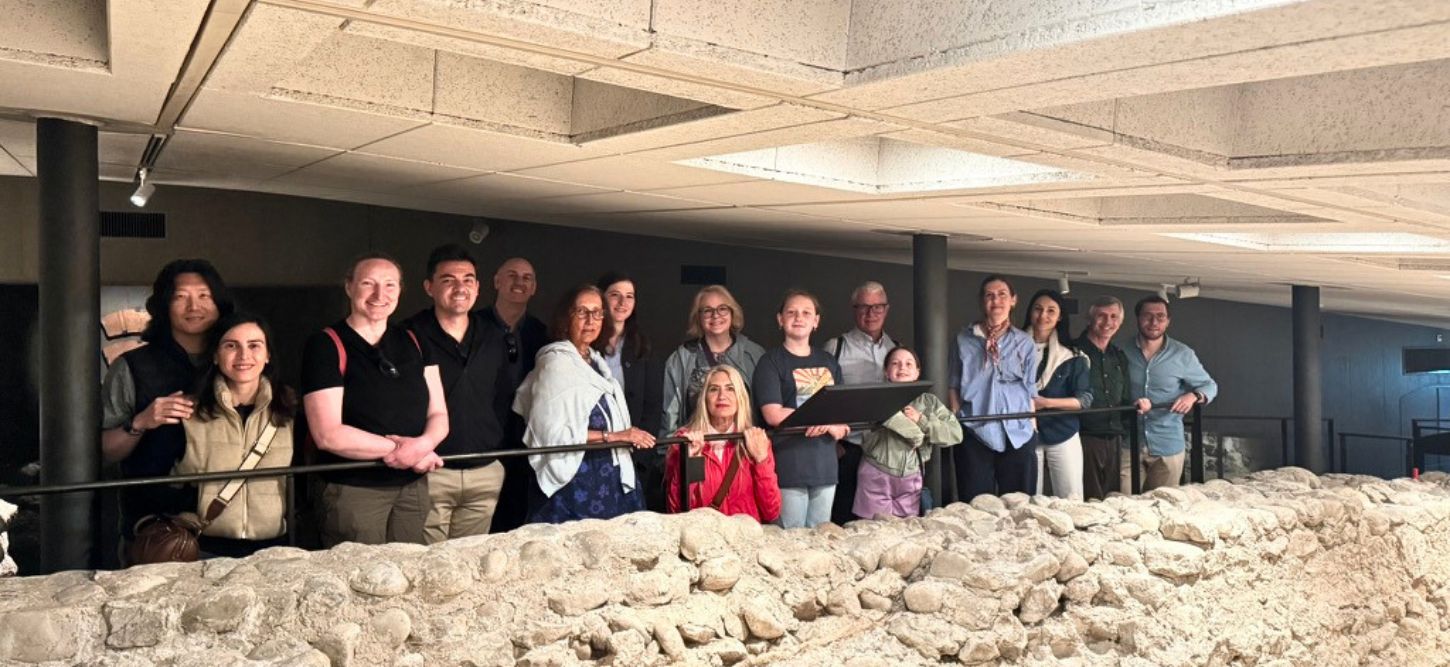
On a beautiful spring Saturday, members and friends of the Cornell Club of Switzerland gathered in Geneva’s Old Town for a fascinating guided tour of the archaeological site beneath St. Pierre Cathedral, followed by sunshine, strolling through historic surroundings, and for some, a convivial dinner at the Hôtel de Ville.
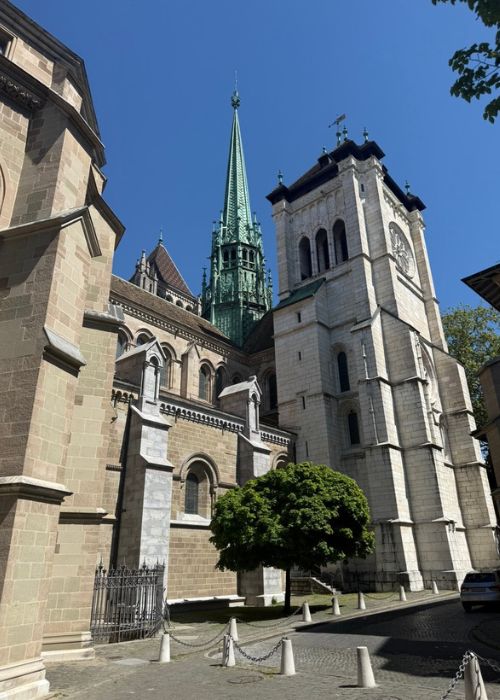
An Outstanding Archaeological Tour
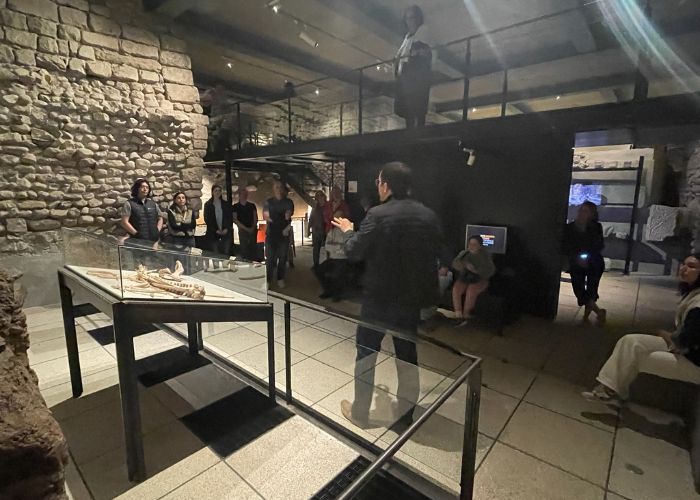
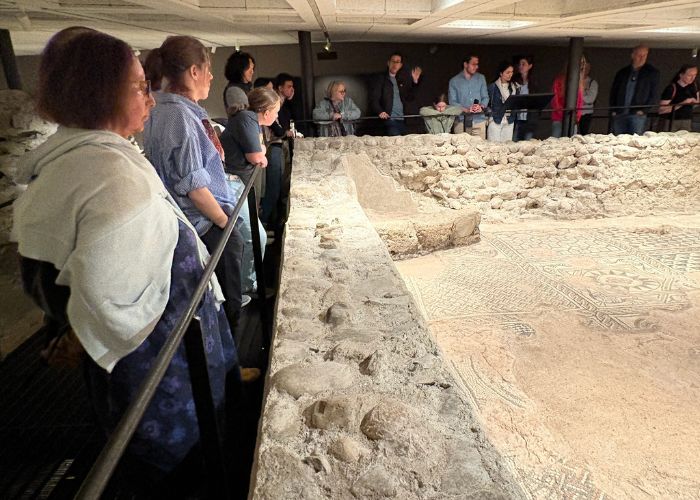
The centerpiece of the afternoon was the guided visit, conducted in English, of the underground archaeological museum beneath St. Pierre Cathedral. We were fortunate to be guided by Jean‑Quentin Haefliger, whose passion and storytelling brought more than 2,000 years of Geneva’s history vividly to life.
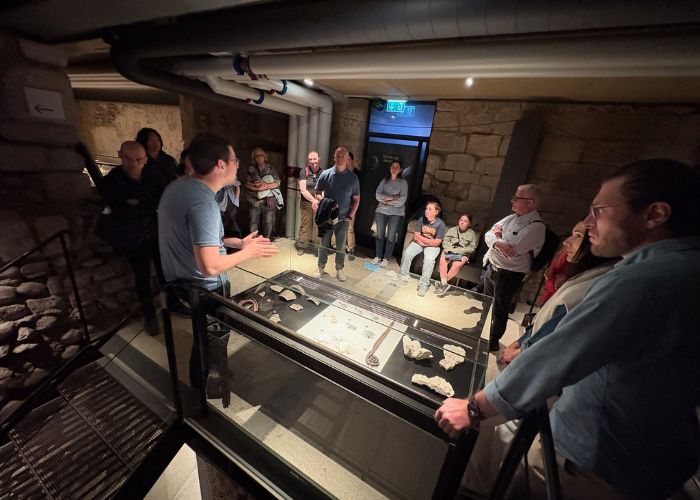
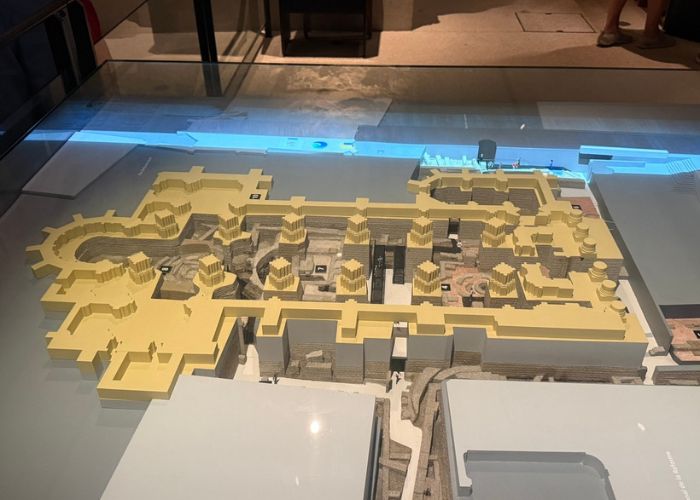
The tour began at the very beginning during the ice ages, when Geneva was still buried under ice. As the glaciers slowly retreated, a hill emerged above the meeting point of the Rhône and Arve, eventually becoming a natural place for people to settle. Its location would shape Geneva’s story for centuries.
The Celtic inhabitants left no written records, so archaeology becomes our window into their world. As we moved down through the earth layers, we could see how life on the hill gradually took shape, from sacred spaces to everyday activity.
Roman influence became apparent when Julius Caesar came to Geneva. He quickly saw the strategic importance of Geneva as a border town and secured the bridge that controlled access against tribes west of the Rhône.
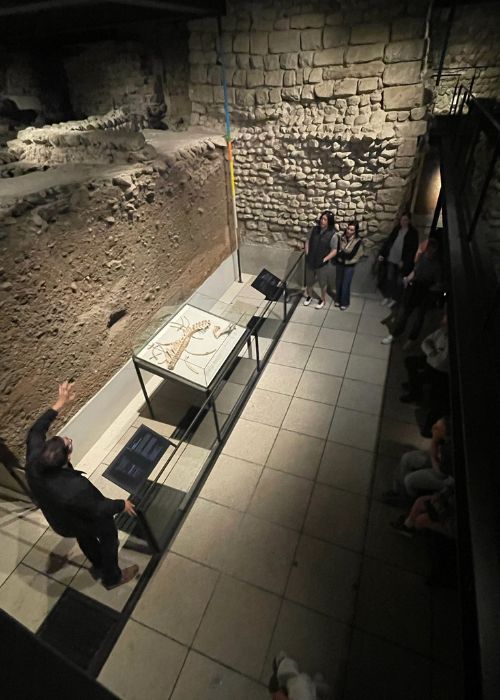
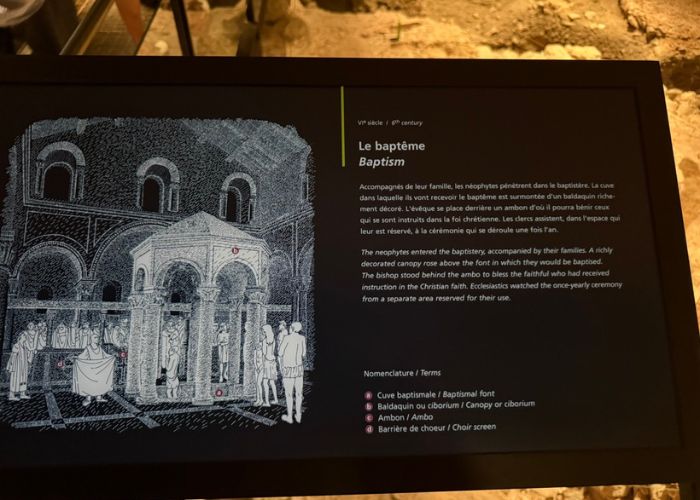
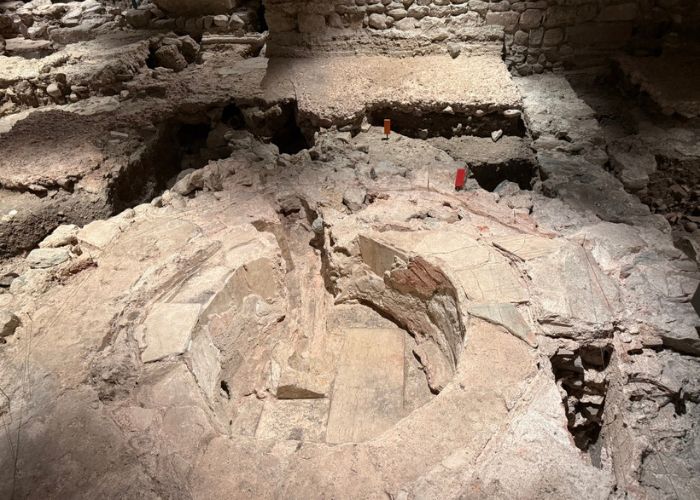
One of the highlights of the site is the baptistery. Excavations reveal a series of baptismal fonts (basins) that gradually decrease in size over the centuries. This is a visible sign of how the ritual itself changed, from full immersion to the more familiar sprinkling.
The growing importance of Geneva’s early church is reflected in the arrival of sacred relics, brought back from Rome by a bishop. These prized objects signaled the city’s rising religious status and confirmed its role as an episcopal seat.
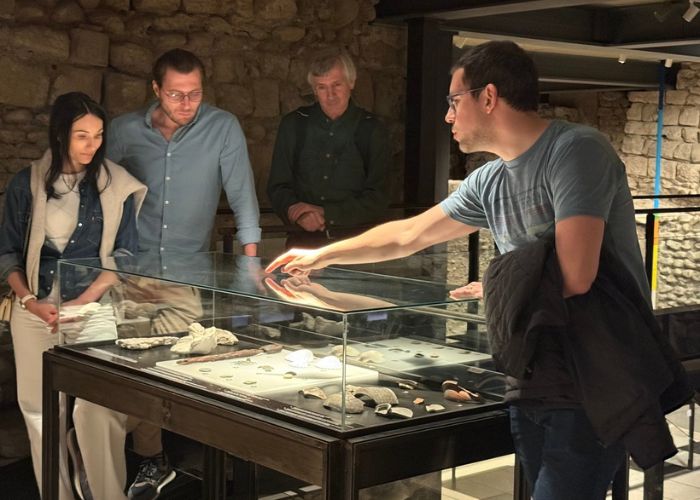
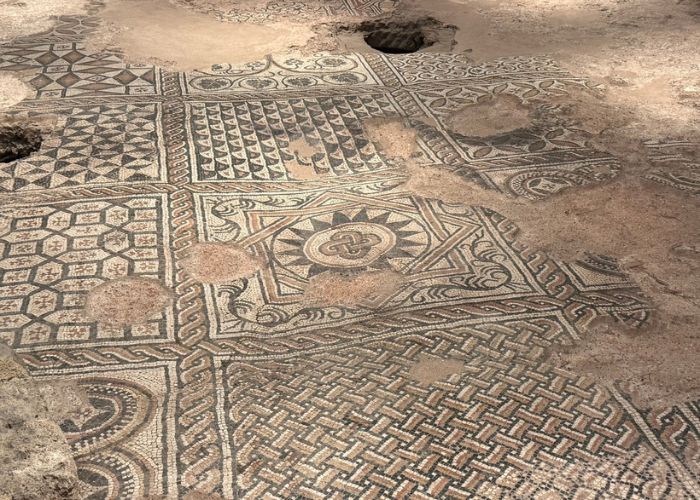
Equally impressive were the mosaics found beneath the cathedral. These finds form part of what is now recognized as one of Europe’s most important underground archaeological complexes.
Sunshine and historic strolls after the tour
After the museum visit, participants enjoyed a sunny late afternoon above ground, lingering along the Promenade de la Treille with its sweeping views over Geneva. Some explored nearby landmarks, including the Alabama Plaque, marking the 1864 signing of the First Geneva Convention and the founding of the International Committee of the Red Cross. While others strolled through the Parc des Bastions, taking in the historic surroundings and mild spring weather.
Dinner at the Hôtel de Ville
Those staying on for dinner gathered at the Restaurant de l’Hôtel de Ville in a private Carnotzet reserved for our group. Afterward, a few members lingered by the cannons at L’Ancien Arsenal, where Jean-Robert (whose wife Jacqueline is a Cornell alumna) shared engaging historical anecdotes inspired by the setting, from the Reformation to Geneva’s role in the founding of the International Committee of the Red Cross and its broader legacy in peacebuilding.
Thank you to all who joined this memorable day. We look forward to many more opportunities to explore Switzerland’s rich history together.